
Last Updated on April 11, 2026 by Jawad
Introduction
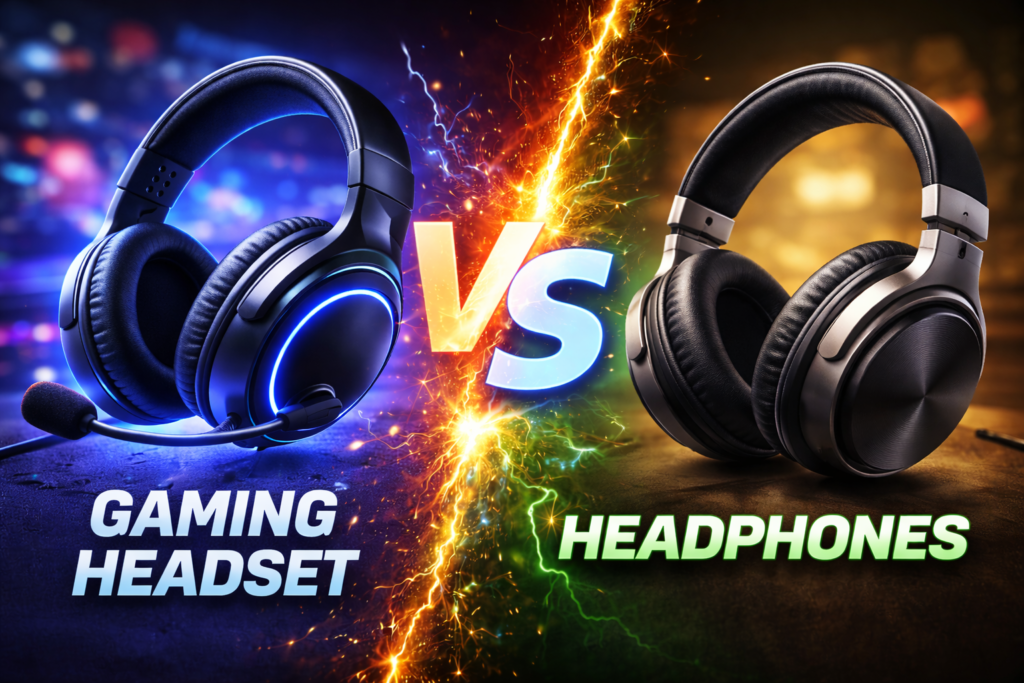
The debate between gaming headset vs headphones has become more relevant than ever in 2026. As gaming technology advances—with realistic sound engines, spatial audio, and competitive esports environments—the importance of choosing the right audio gear has skyrocketed. What might seem like a simple decision at first can actually impact your reaction time, immersion, communication clarity, and even long-term comfort.
At a surface level, gaming headsets and headphones look similar. Both sit over your ears, both deliver audio, and both can be used for gaming. However, once you go deeper, you’ll find that they are built with completely different philosophies. Gaming headsets are designed for convenience and in-game advantage, while headphones are built for audio accuracy and versatility.
Understanding these differences in detail will help you make a smarter buying decision—especially if you’re investing in a long-term gaming setup.
Gaming Headset vs Headphones: Quick Comparison Table
| Feature | Gaming Headset | Headphones |
|---|---|---|
| Primary Purpose | Gaming-focused (communication + immersion) | Audio quality (music, gaming, multimedia) |
| Microphone | ✅ Built-in mic | ❌ Requires external mic |
| Sound Quality | Good (tuned for gaming) | Excellent (balanced & detailed) |
| Sound Signature | V-shaped (boosted bass & treble) | Neutral / balanced / natural |
| Positional Audio | Virtual surround (software-based) | Natural imaging (more accurate) |
| Soundstage | Moderate (simulated) | Wide (especially open-back) |
| Ease of Use | ✅ Plug & play | ⚠️ May need DAC/mic setup |
| Latency | Low (wired/2.4GHz wireless) | ⚠️ Depends (Bluetooth can lag) |
| Comfort | Designed for long gaming sessions | Varies (often premium comfort) |
| Build Quality | Good (plastic-heavy) | Better (metal/studio-grade) |
| Versatility | ❌ Mostly gaming | ✅ Gaming, music, movies, work |
| Upgrade Options | ❌ Limited | ✅ Expandable (DAC, amp, mic) |
| Price Value | Features-focused | Better audio per dollar |
| Best For | Casual gamers, console players | Serious gamers, audiophiles |
🎮 Understanding the Core Philosophy
Gaming headsets are built as all-in-one solutions. Manufacturers assume that gamers want something simple: plug it in, talk to teammates, and hear everything clearly. That’s why gaming headsets include built-in microphones, virtual surround sound, and software enhancements. They are designed to enhance specific in-game sounds, such as footsteps, reloads, and directional cues, even if it means sacrificing natural audio balance.
Headphones, on the other hand, are built with a completely different goal: faithful sound reproduction. Instead of enhancing certain frequencies artificially, they aim to reproduce audio exactly as it was intended by the developers, musicians, or sound engineers. This makes them more suitable not only for gaming but also for music, movies, and professional work.
This difference in philosophy is the foundation of the entire gaming headset vs headphones debate.
🔊 Sound Quality: Beyond Just “Good” or “Bad”
Sound quality is often the biggest deciding factor, but it’s also the most misunderstood. Many people assume louder bass or sharper treble means better sound, but that’s not necessarily true.
Gaming headsets typically use V-shaped sound tuning, where bass and treble are boosted while mids are slightly recessed. This creates a more “exciting” sound profile, making explosions feel powerful and footsteps more noticeable. While this can give you a slight advantage in fast-paced games, it can also make audio feel unnatural over time, especially in story-driven or cinematic games.
Headphones, especially studio-grade or audiophile models, focus on balance and clarity. Instead of exaggerating certain sounds, they provide a more detailed and layered listening experience. You’ll hear subtle environmental details, background effects, and directional cues more naturally. This becomes especially important in games with rich audio design, where immersion matters just as much as performance.
In simple terms, gaming headsets highlight important sounds, while headphones reveal all sounds.
🎯 Positional Audio and Competitive Advantage
One of the most critical aspects of gaming audio is positional accuracy, also known as imaging. This determines how accurately you can tell where a sound is coming from—left, right, behind, above, or below.
Gaming headsets often rely on virtual surround sound technologies, such as 7.1 surround. These systems use software algorithms to simulate a multi-speaker environment inside your ears. While this can be helpful, it is not always perfectly accurate and can sometimes feel artificial or “processed.”
Headphones, particularly open-back models, provide a naturally wider soundstage. This means sounds feel more spread out and realistic, making it easier to pinpoint enemy positions without relying on software tricks. In competitive games like FPS shooters, this can translate into faster reactions and better decision-making.
Interestingly, many experienced gamers eventually switch to headphones because they offer more consistent and reliable spatial awareness, even without surround sound.
🎤 Microphone Quality and Communication
Communication is a major factor, especially in multiplayer and team-based games. This is where gaming headsets have a clear advantage in terms of convenience.
Gaming headsets come with built-in boom microphones that are positioned close to your mouth. These mics are optimized for voice chat and often include noise-canceling features to reduce background noise. For most gamers, this setup is more than sufficient for Discord, in-game chat, and casual streaming.
However, when it comes to pure microphone quality, external microphones outperform built-in ones by a significant margin. A dedicated USB or XLR microphone can deliver richer, clearer, and more professional-sounding audio. This is why streamers, YouTubers, and content creators almost always use headphones combined with an external mic.
So while gaming headsets win in simplicity, headphones paired with a good mic win in audio professionalism and clarity.
⚡ Latency, Connectivity, and Real-Time Performance
Latency is often overlooked, but it can make a noticeable difference in gaming performance. Even a slight delay between what you see and what you hear can affect your timing in competitive games.
Gaming headsets are typically designed with low-latency connections, especially when using wired or 2.4GHz wireless technology. This ensures that audio is delivered almost instantly, which is crucial for fast-paced gameplay.
Headphones, particularly Bluetooth models, can introduce audio delay. While this may not be noticeable for music or movies, it can be a disadvantage in gaming. That’s why serious gamers who use headphones often stick to wired connections or low-latency audio setups.
🛋️ Comfort and Long Gaming Sessions
Comfort is highly subjective, but it becomes extremely important during long gaming sessions. Wearing uncomfortable headphones or headsets for hours can lead to fatigue, headaches, or ear pain.
Gaming headsets are typically designed with long sessions in mind. They often include memory foam ear cushions, adjustable headbands, and lightweight materials. Some even use breathable fabrics to reduce heat buildup.
Headphones, especially premium models, can also be very comfortable, but this varies depending on the design. Studio headphones may prioritize durability over comfort, while audiophile models often strike a balance between the two.
In general, both options can be comfortable—but gaming headsets are more consistently optimized for extended gaming use.
💰 Value for Money and Long-Term Investment
When comparing gaming headsets vs headphones, value for money is a crucial factor that many buyers overlook.
Gaming headsets bundle multiple features into one product: audio, microphone, software, and sometimes RGB lighting. While this seems like a good deal, part of your budget goes toward these extra features rather than pure audio performance.
Headphones, on the other hand, invest most of their cost into sound quality and build materials. This often results in better audio performance at the same price point. Additionally, headphones tend to last longer and can be upgraded with external components like DACs, amplifiers, and microphones.
From a long-term perspective, headphones are usually the better investment, especially if you plan to upgrade your setup over time.
🧪 Real-World Use Cases
The best choice between gaming headsets and headphones depends heavily on how you plan to use them.
For competitive FPS gaming, headphones often provide better positional accuracy and clarity, giving you a slight edge in detecting enemy movement. For casual multiplayer gaming, gaming headsets are more convenient because of their built-in mic and easy setup.
If you enjoy story-driven or cinematic games, headphones offer a more immersive experience due to their superior sound quality and natural soundstage. For streaming and content creation, headphones paired with a high-quality microphone provide the best overall setup.
Console gamers, however, may prefer gaming headsets because they are easier to use and more compatible with plug-and-play systems.
🧠 The Hidden Truth About “Gaming” Branding
One important aspect that many buyers don’t realize is the impact of marketing and branding. Products labeled as “gaming” often include flashy designs, RGB lighting, and aggressive styling. While these features can be appealing, they don’t necessarily improve audio quality.
In many cases, you’re paying extra for aesthetics and branding rather than performance. This is why experienced users often recommend non-gaming headphones for better value and sound quality.
⚖️ Final Verdict: Which One is Better?
The answer ultimately depends on your priorities.
If you value convenience, simplicity, and built-in communication, a gaming headset is the better choice. It’s easy to use, requires no additional equipment, and is perfect for most casual gamers.
If you prioritize sound quality, immersion, and long-term value, headphones are the superior option. When paired with a good microphone, they offer a more powerful and flexible setup that can adapt to different needs.
❓ Frequently Asked Questions (FAQs)
A gaming headset is better for convenience and communication because it includes a built-in microphone and gaming-specific features like virtual surround sound. However, headphones are generally better for sound quality and accuracy, making them ideal for serious or competitive gamers.
Yes, since most headphones do not include a built-in mic, you will need an external microphone for voice chat. Many gamers use USB or boom mics for better voice quality compared to headset microphones.
Professional gamers use both, depending on the situation. In tournaments, many use gaming headsets for communication, but some prefer high-quality headphones with external microphones for better audio accuracy.
Yes, headphones—especially open-back models—are excellent for competitive FPS games. They provide better positional audio and soundstage, helping you detect enemy movement more accurately.
No, surround sound is not necessary. Many gamers achieve excellent results with stereo headphones, as natural sound imaging can be more accurate than virtual surround sound.
Headphones are generally better for long-term use because they offer higher build quality, better sound performance, and upgrade flexibility. You can also pair them with different microphones and audio gear over time.
🏁 Conclusion
The gaming headset vs headphones debate isn’t about which one is universally better—it’s about which one is better for you.
Gaming headsets are designed to make gaming easier and more accessible, while headphones are designed to deliver the best possible audio experience. As you move from casual gaming to more serious or competitive setups, the advantages of headphones become more apparent.
For most users starting out, a gaming headset is a great choice. But for those looking to upgrade their experience and get the most out of their games, investing in high-quality headphones with a dedicated microphone is the ultimate solution.

Jawad is a passionate tech enthusiast and writer who loves exploring the latest trends in hardware, gadgets, and digital innovation. With a sharp eye for performance and value, he delivers in-depth recommendations and buying guides to help readers make smarter tech decisions.